
The Future of Solar CRM Systems: Automation, Data and AI
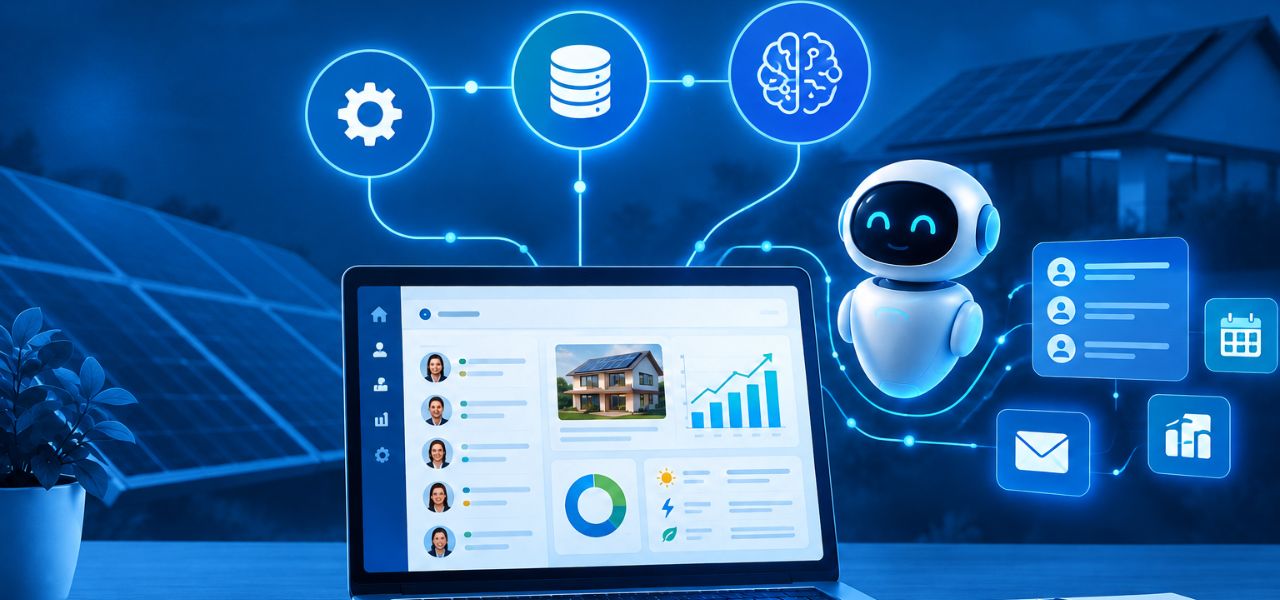
2026 is the year that is widely regarded as the age of AI. Across industries, AI is helping organisations automate repetitive tasks, analyse large volumes of data, improve decision-making, and deliver better customer experiences. The solar industry is no exception.
As a result, the role of a solar CRM systems is evolving rapidly. Today’s solar businesses need more than a database for leads and customer records. They need intelligent platforms that combine automation, data, and AI to streamline operations from initial enquiry through to installation and ongoing support.
Why Solar Businesses Are Outgrowing Traditional CRM Tools
Traditional CRMs are designed with the capacity to accommodate various sectors, mainly revolving around contact management, lead generation, and customer management. Nevertheless, solar companies have other distinct needs that must be catered to, such as site inspection, quoting, scheduling of installations, inventory management, documentation, and after-sales service provision.
As the business grows, handling these needs through traditional CRMs becomes inefficient and cumbersome, resulting in disconnection of various tasks. This explains why most solar companies are embracing CRMs that are built specifically for solar companies’ workflow.
The Rise of Automation in Solar CRM Software
Automation is fast becoming a baseline expectation, not a nice-to-have, in solar CRM technology. Automated lead capture, quote generation, follow-ups, and job status updates free up sales and admin teams from repetitive manual work, enabling faster lead-to-quote turnaround and error-free compliance paperwork, fewer dropped leads, and smoother installer scheduling. As competition in the solar market increases, automation is quickly becoming the difference between businesses that scale efficiently and those that get buried in admin.
Data Will Become the Foundation of Better Decision-Making
As solar businesses grow, they generate large amounts of data across sales, installations, inventory, audits, and customer interactions. The future of CRM for solar companies will focus on turning this data into actionable insights rather than simply storing information.
Modern solar CRM systems help businesses track sales performance, monitor installation pipelines, forecast demand, manage inventory, identify bottlenecks, and improve customer retention. By bringing data into one platform, solar businesses can make faster and more informed decisions.
How AI Is Changing Solar CRM Systems
Artificial intelligence is quickly becoming one of the most significant developments in solar CRM technology. While AI is often associated with chatbots and content generation, its most valuable role inside a solar CRM is operational intelligence. AI-powered CRM systems can help businesses:
Prioritise High-Value Leads – Using AI, businesses can use customer behavior data, information from inquiries, and historic conversion patterns to determine which prospects are most likely to convert.
Improve Data Quality – AI can automatically populate records, identify missing information, and reduce manual data entry requirements.
Recommend Next Actions – Rather than leaving next steps in the hands of salespeople, AI can recommend follow-ups, reminders, and customer engagement opportunities based on pipeline activity.
Enhance Field Operations – Modern AI solutions can check the validity of installation images and incomplete paperwork before the crew leaves the site.
What Solar Companies Should Look for in a Future-Ready CRM
While automation, data, and artificial intelligence move from premium add-ons to basic features, solar businesses evaluating solar CRM systems should consider:
- Workflow automation capabilities
- AI-driven insights
- Mobile accessibility
- Installation tracking
- Inventory management
- Compliance workflows
- Reporting and analytics
- Integration options
- Scalability for future growth
The best solar CRM systems will not simply store customer information. They will actively help businesses improve efficiency, automate operations, and make smarter decisions.
Energy Suite: Built for the Future of Solar CRM
The future of solar CRMs is based on integrating sales, operations, field, compliance, reporting, and customer management all within a single, integrated solution.
Energy Suite is built specifically for Australian solar, HVAC, lighting, hot water, and energy-efficiency businesses. It combines prospect management, quoting, e-signatures, assessments, installation tracking, inventory management, field audits, reporting, and workflow visibility within a single system.
With a dedicated mobile app, field teams can access job information, complete assessments, capture photos, update installation progress, and manage audits directly from site. As automation, data, and AI continue to reshape the Australian renewable energy industry, connected platforms like EnergySuite can help businesses streamline operations and scale more efficiently.
Curious how a modern solar CRM can streamline your business? Book a free demo with EnergySuite today.

Renewable Energy CRM
16 Oct 2026How VEU-Accredited Businesses Can Streamline Operations with an Energy CRM
For VEU-accredited businesses, efficiency and accuracy go hand in hand. Every job brings customer details,…
Read More
Renewable Energy CRM
10 Sep 2026ERP vs CRM in Energy: Key Differences and Why Integration Matters
As energy businesses such as solar installers, HVAC providers, lighting contractors, and multi-service operators scale…
Read More
Renewable Energy CRM
24 Aug 2026Best CRM for Solar Installers in Australia: What to Look for in 2026
Finding the best CRM for solar installers in Australia is about more than managing contacts…
Read More