
Best CRM for Solar Installers in Australia: What to Look for in 2026
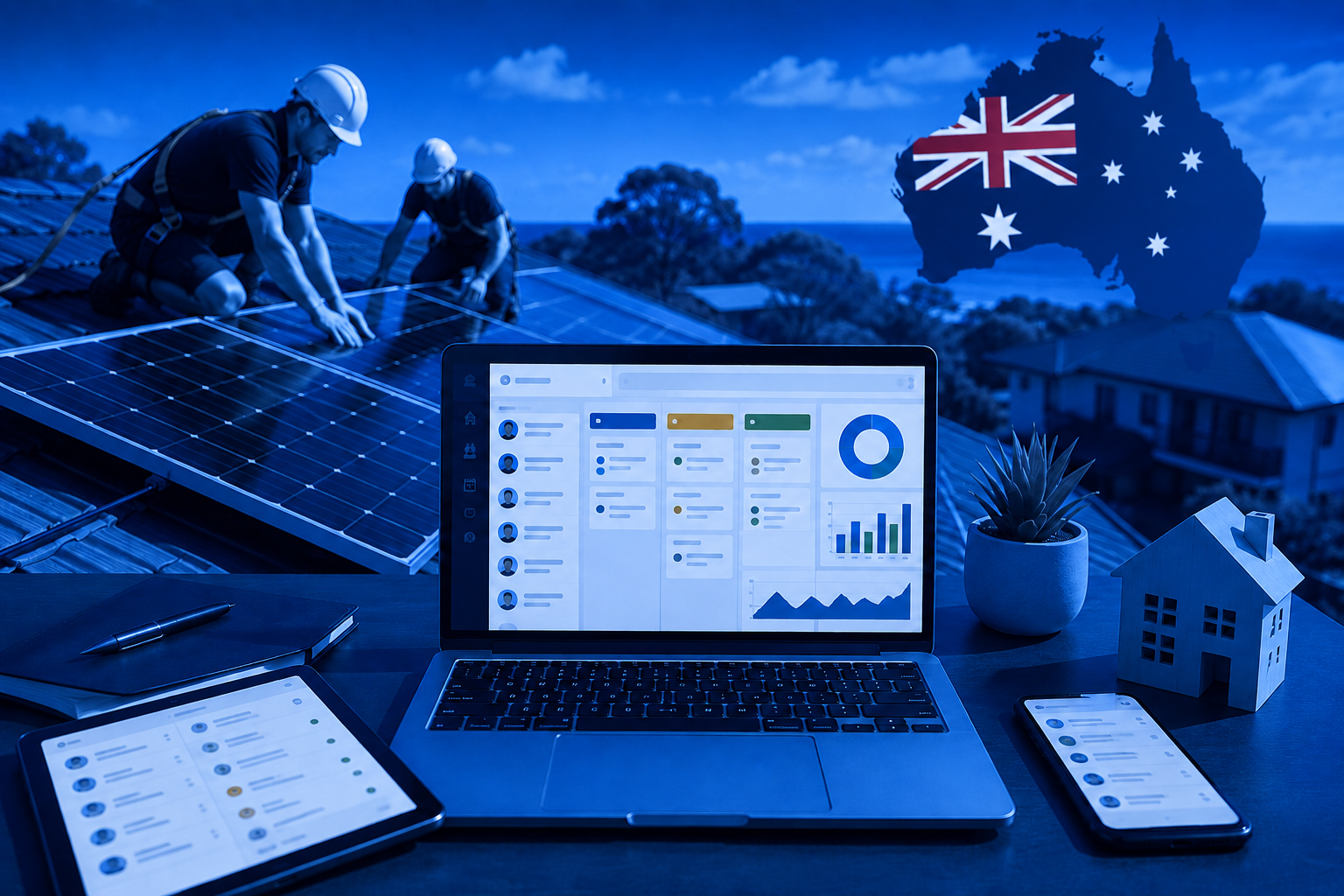
Finding the best CRM for solar installers in Australia is about more than managing contacts and tracking sales. Solar businesses handle a much longer customer journey, moving from initial enquiry and assessment through quoting, scheduling, installation, auditing and ongoing support.
That means a generic CRM may only manage part of the process. In 2026, a CRM for solar installers needs to connect sales with the operational work happening after a customer says yes.
So, what should Australian solar businesses actually look for?
Why Solar Installers Need a Purpose-Built CRM
A standard CRM is generally designed around a straightforward sales journey:
Lead → Follow-Up → Sale
Solar installation involves considerably more:
Lead → Assessment → Quote → Scheduling → Installation → Audit → Support
Once installation volumes increase, managing those stages across spreadsheets, calendars, and disconnected software can make it harder for teams to know exactly where each customer or job stands.
A purpose-built solar CRM brings those processes together, giving sales, office, and field teams access to the information they need throughout the customer lifecycle.
What Makes the Best CRM for Solar Installers?
The best CRM is the one that matches how a solar business actually operates. For Australian solar installers, that means looking beyond basic contact management and considering:
- Lead and prospect management
- Quotes and invoices
- Job scheduling and team allocation
- Installation tracking
- Audit and compliance workflows
- Reporting and analytics
- Inventory and vendor management
- Integration with existing business tools
EnergySuite brings these operational functions together within a CRM built specifically for renewable and energy-efficiency businesses.
Solar Lead Management and Follow-Ups
Every installation starts with a lead, but not every lead is ready to buy immediately.
A CRM for solar companies should make it easy to capture prospects from different sources, qualify opportunities, and maintain visibility over follow-ups. This helps reduce the chance of promising enquiries disappearing because a callback was missed or customer information was scattered across different systems.
EnergySuite supports lead capture and qualification while keeping prospect information connected to the wider customer lifecycle.
Solar Installation Scheduling and Job Tracking
Closing the sale is only one milestone. Now the installation needs to happen.
This is where a purpose-built CRM for solar installers becomes particularly valuable. Office teams need to coordinate appointments and allocate work, while installers need clear job information and managers need visibility over progress.
EnergySuite supports GPS-based scheduling and team allocation alongside real-time installation tracking, helping businesses connect what happens in the office with what is happening in the field.
The real question isn’t simply, “Can my CRM manage customers?” It is, “Can it manage what happens after the customer says yes?”
Solar Audit and Compliance Management
Solar businesses also operate within an environment where documentation, quality control and compliance matter.
Rather than treating audits as a completely separate process, a specialised solar CRM in Australia can help integrate them into the wider job workflow.
EnergySuite includes audit workflows, field audit scheduling and compliance-related functionality. Its field processes can also support on-site verification and maintain historical records throughout the customer lifecycle.
Reporting and Integrations for Growing Solar Businesses
As a solar business grows, visibility becomes increasingly important.
Managers need more than a final sales number. They need to understand where prospects are sitting, how jobs are progressing, and where operational bottlenecks may be developing.
EnergySuite offers reporting and analytics capabilities, with higher-level functionality including custom reporting and integrations such as Xero and Pylon.
This creates a more connected view of the business instead of requiring teams to piece information together manually.
Choosing the Best CRM for Your Solar Business in 2026
Before choosing a CRM for solar installers in Australia, ask a few practical questions:
- Can it manage leads and jobs in the same system?
- Can office and field teams work from shared information?
- Does it support installation tracking and scheduling?
- Can auditing and compliance fit into the workflow?
- Will the CRM continue working as installation volumes increase?
If the answer stops at lead management, you may be looking at a sales CRM rather than a platform built around the complete solar workflow.
Also Read: How to Choose the Right CRM for an Energy Utility Business in Australia
Why EnergySuite Works for Australian Solar Installers
The best CRM for solar installers is ultimately the one that reduces friction from the first enquiry through to completed installation and beyond.
EnergySuite has been built specifically around renewable-energy operations, connecting prospect management, quotes and invoices, scheduling, installation tracking, audit workflows, reporting and field operations within one platform.
For Australian solar businesses looking to move beyond disconnected tools and manage more of their operation from one place, EnergySuite provides a CRM designed around the work energy businesses actually do; not simply the customers they sell to.

Renewable Energy CRM
16 Oct 2026How VEU-Accredited Businesses Can Streamline Operations with an Energy CRM
For VEU-accredited businesses, efficiency and accuracy go hand in hand. Every job brings customer details,…
Read More
Renewable Energy CRM
23 Sep 2026The Future of Solar CRM Systems: Automation, Data and AI
2026 is the year that is widely regarded as the age of AI. Across industries,…
Read More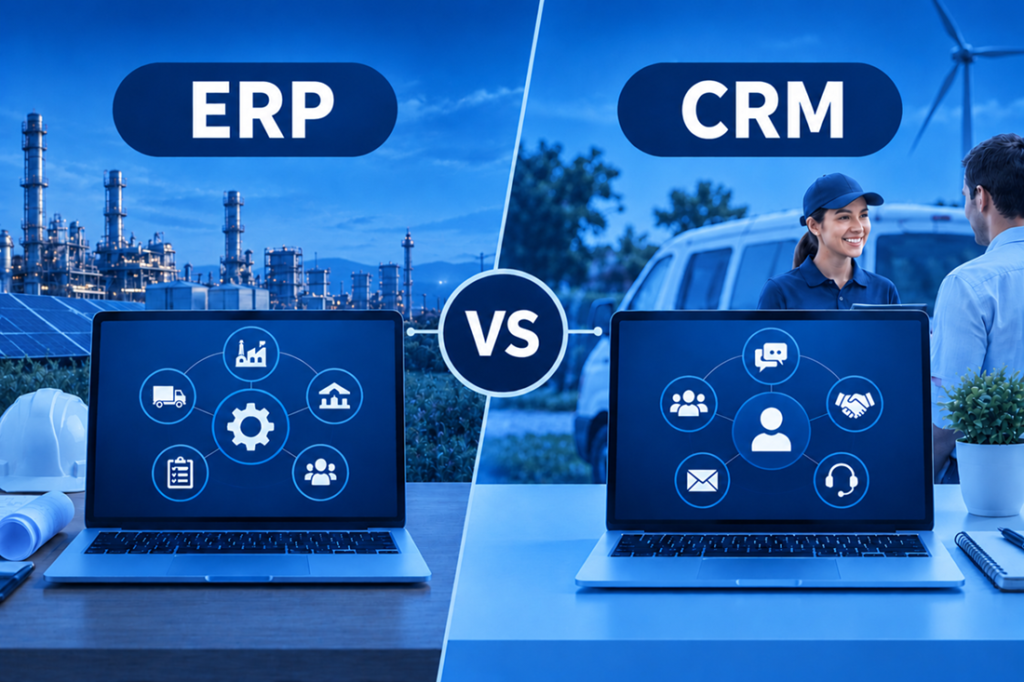
Renewable Energy CRM
10 Sep 2026ERP vs CRM in Energy: Key Differences and Why Integration Matters
As energy businesses such as solar installers, HVAC providers, lighting contractors, and multi-service operators scale…
Read More